
Autism
Autism and exercise for children and adolescents
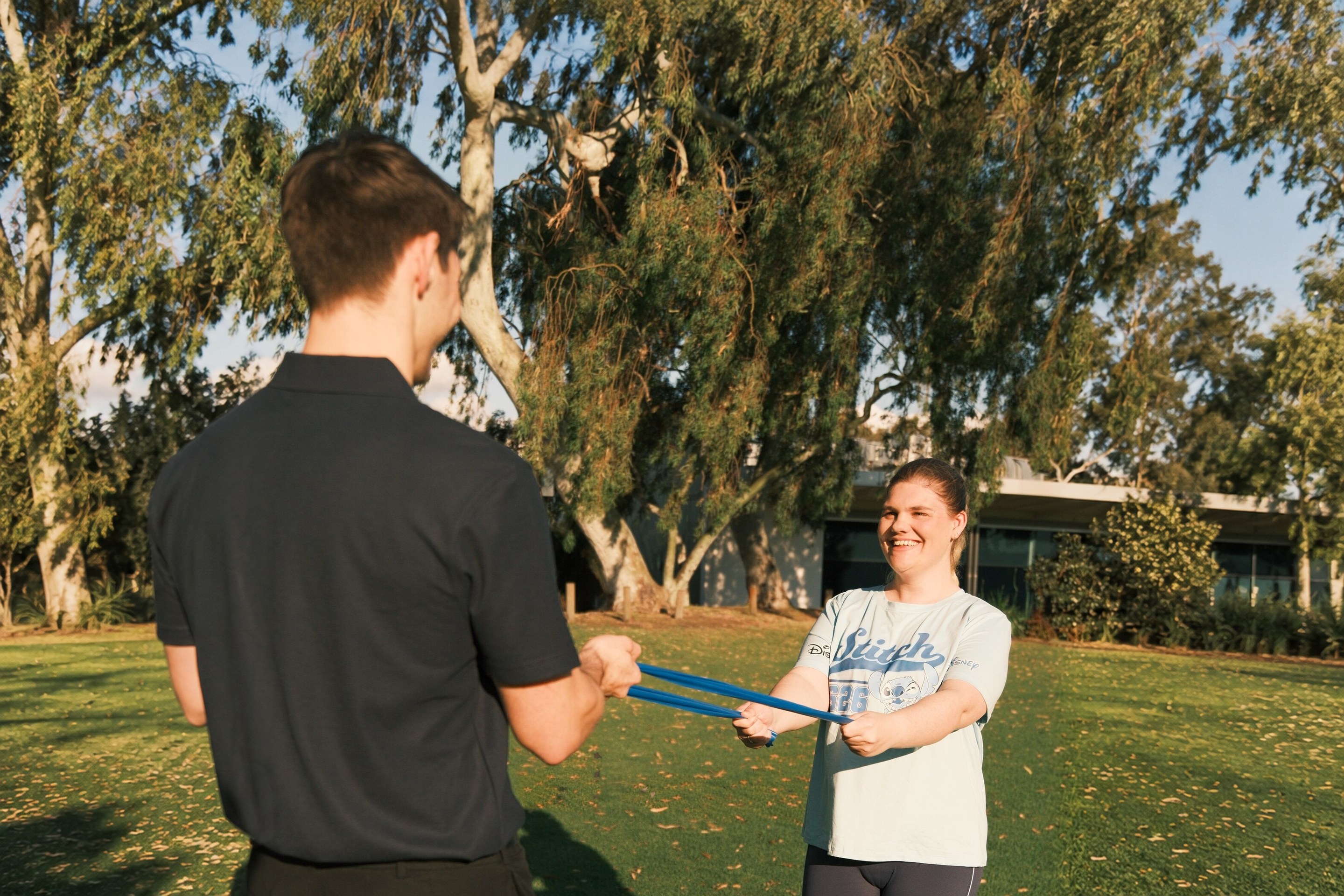
For an autistic young person, exercise should be enjoyable, accessible and connected to their interests. A tailored program can help develop movement skills and work towards activities they want to do.
How exercise supports autistic children and adolescents
Some autistic children and adolescents find balance, coordination or physical activities challenging. Others are confident movers. An assessment helps identify whether exercise support would be useful and what it should focus on.
Research supports physical activity to develop movement skills and physical capacity in autistic young people. A meta-analysis found benefits in movement skills, muscular strength and endurance (Healy et al., 2018). At Motus, we connect these areas to activities the young person enjoys and wants to participate in.
Developing motor skills through exercise
Running, catching, throwing and balancing can be developed through practice matched to the child’s interests and ability. A 2023 review found that exercise interventions improved skills used to move the body, control objects and maintain stability in children with autism (Ji et al., 2023).
The practical focus is to build on each young person’s strengths, with progression guided by their response and the skills they want to develop.
Exercise physiology focuses for autistic young people
- Progressive strength and fitness: gradually increase exercise demands to develop physical capacity at an achievable pace.
- Motor skill development: break movements into manageable steps and build coordination through purposeful practice.
- Sensory and communication support: adapt instructions, demonstrations and the environment to support engagement.
- Confidence and participation: use interests, choice and achievable challenges to build positive experiences with physical activity.
Setting goals that matter
A goal might be catching a ball, joining a preferred game, building cycling skills or feeling more comfortable exercising. We can track the specific skill being practised and adjust the plan as the young person develops.
Sessions combine purposeful movement practice and progressive exercise, adapted to sensory preferences, communication and motivation. Clear routines, choice and planned breaks help make the program accessible and engaging.
Exercise physiology and the NDIS
Exercise physiology may be funded through the NDIS when it addresses disability-related needs and meets funding criteria. Confirm the relevant support in the young person’s plan before booking so sessions can be aligned with their funded goals.
My experience making exercise engaging through games
With one young boy I work with, building a strong relationship has been central to our sessions. I incorporate resistance training into games and friendly competition, and we use basketball and other activities to work on fitness, motor skills, balance, strength and joint control. As I have got to know him, I have learned which approaches best help him regulate and engage. Alongside progress in his fine and gross motor skills, I have observed growing independence and communication skills. His interests help shape how we work towards those goals.
Mobile autism exercise physiology in Perth
Motus Integrated Health provides individualised mobile exercise physiology for autistic children and adolescents across metropolitan Perth. We work with the young person and, where appropriate, their family and support team to build a practical plan in a suitable familiar setting.
General information only. Exercise advice should be tailored to your health, needs and goals.
References
- Healy S, Nacario A, Braithwaite RE, Hopper C (2018). The effect of physical activity interventions on youth with autism spectrum disorder: A meta-analysis. Autism Research, 11(6), 818–833. Read article
- Ji YQ, Tian H, Zheng ZY, Ye ZY, Ye Q (2023). Effectiveness of exercise intervention on improving fundamental motor skills in children with autism spectrum disorder: A systematic review and meta-analysis. Frontiers in Psychiatry, 14, 1132074. Read article
- Funding information: National Disability Insurance Agency. What are therapy supports. Current 17 July 2026. NDIS guidance